

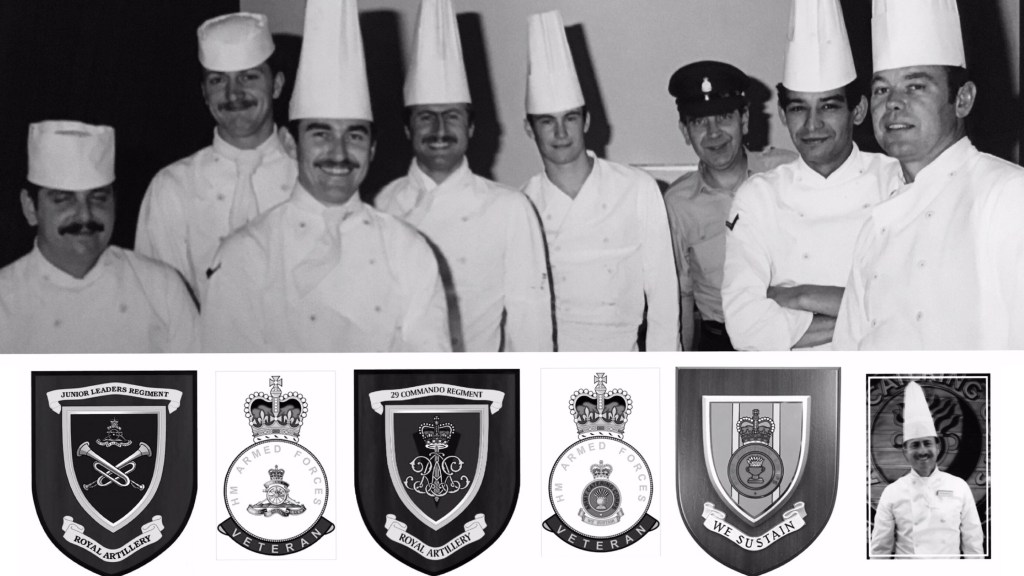
I’m sharing my Butchery Guide & Skills, created to preserve some of the traditional skills once taught within the Army Catering Corps. Good butchery was about far more than cutting meat—it meant craftsmanship, discipline, reducing waste and getting the best from every joint. These were skills learned through practice and pride, and I believe they deserve to be remembered and passed on.
I can’t take all the credit for this one. I got the idea from a blog I found on the Army Chefs Banter Page, and it immediately struck a chord. I could relate to it because something very similar actually happened to me when a few of my chefs went wandering across the Scots Guards parade square. Unfortunately for them, the RSM spotted them—and he was known as “The Drill Sergeant”! Needless to say, a quiet day suddenly became very interesting. Some Army memories are simply too good not to turn into poetry.
#ArmyCateringCorps, #CabbageCommandos, #ArmyChefBanter, #BritishArmyMemories, #SquaddieHumour, #MilitaryMemories
Paul Baldry — Master Chef ACC
#ArmyCateringCorps, #ButcherySkills, #MilitaryCatering, #ArmyChef, #ACCHistory, #PaulBaldry
The No.1 Burner
The No.1 Burner was never just a piece of Army equipment to me—it was the heartbeat of every field kitchen. I actually loved cooking on the range it heated. Controlling the temperature was a skill in itself; too much heat and breakfast was ruined, too little and hungry soldiers waited. It was noisy, temperamental and often infuriating, yet somehow became one of my favourite memories from life in the Army Catering Corps. This poem is my tribute to that roaring old workhorse.
#ArmyCateringCorps, #No1Burner, #FieldKitchen, #MilitaryCooking, #VeteranLife, #PaulBaldry
The Kitchen Stock Pot
My Favourite Soup Recipes
Introduction
Few dishes have served the British soldier as faithfully as a good bowl of soup. From the field kitchens of wartime Europe to peacetime barracks across the world, soup has provided warmth, nourishment and comfort in every season.
This collection brings together twelve classic recipes inspired by the traditions of the British Army Catering Corps. Recreated from historic Army catering manuals, each recipe has been adapted for both large-scale military catering and the modern home kitchen, allowing these timeless dishes to be enjoyed by everyone.
Whether it’s a hearty Scotch Broth after a cold day’s training, a comforting Potato Soup in the mess, or a rich Oxtail Soup served during winter months, every recipe reflects the Army’s philosophy of producing wholesome, economical meals that never compromise on flavour.
These are more than just soup recipes—they are part of a culinary heritage that helped sustain generations of British soldiers. I hope they inspire you to recreate a little piece of that tradition in your own kitchen.
Good soup. Strong soldiers. Timeless recipes.
Paul Baldry
Master Chef ACC
My Favourite Fish Recipes
My Favourite Chicken Dishes
My Favourite Beef Dishes
GURKHA COOKERY
Introduction
During my twenty-six years in the British Army, I was fortunate enough to cook alongside soldiers from many backgrounds, but nothing ever impressed me more than Gurkha cookery. Having spent a lifetime in professional catering, both in uniform and beyond, I can honestly say that this is, in my opinion, the finest collection of curry and spicy food recipes ever produced.
These recipes are not restaurant adaptations or modern interpretations. They are practical, authentic military recipes developed to feed large numbers of soldiers while never compromising on flavour. Every masala, every curry, every rice dish and every dal reflects generations of knowledge passed from Gurkha cooks whose understanding of spices was second to none.
What makes this collection truly special is its simplicity. There are no unnecessary ingredients and no complicated techniques—just honest cooking built on perfectly balanced spice blends and sound culinary principles. Once you understand the basic preparations, the possibilities become almost endless.
Over many years I have cooked food from every corner of the world, yet I always return to Gurkha cookery. For depth of flavour, balance of spice and sheer consistency, I have never found anything that surpasses it. If someone asked me to choose just one curry cookbook to keep for the rest of my life, this would be it.
In my opinion, this is quite simply the best curry and spicy food book on the planet.
MESS DINING: A HISTORICAL INTRODUCTION
After many months of research and writing, I’m pleased to share my latest historical document, Mess Dining Traditions: A Historical Introduction.
Drawing on my years as an Army Catering Corps chef, together with extensive historical research, this 94-page publication explores the traditions that made British Army messes far more than just places to eat.
Inside you’ll discover:
• The history and evolution of British Army mess dining
• Officers’, WOs’ & Sergeants’, and All Ranks traditions
• Mess etiquette, ceremonial toasts, and wine customs
• Humorous and historical mess anecdotes from across the British Army
• Authentic reconstructed Officers’ and WOs’ & Sergeants’ Mess menus from the 1940s through to the 1990s
Whether you served in the Army, have an interest in military history, or simply enjoy traditional British cuisine, I hope you’ll find something to enjoy.
I’d especially love to hear your own memories of Dining-In Nights, Mess functions, favourite menus, or those stories that every regiment seems to have.
As always, your comments, memories and photographs are very welcome.
Paul Baldry
Master Chef ACC (Retired)
Manual of Catering Services (1993)
After many weeks of work, I’m delighted to share my latest project—a professionally designed edition of the 1993 JSP 404 Manual of Catering Services – Volume Two: Recipes.
This remarkable manual marked the final years of the Army Catering Corps before its amalgamation into the Royal Logistic Corps and contains hundreds of standard military recipes used to train generations of Army chefs. From stocks, sauces and soups to meat, fish, pastry, bakery and Gurkha cookery, it represents one of the most comprehensive military recipe collections ever produced.
As a retired Army Catering Corps Master Chef, preserving these manuals and the history behind them has become a real passion of mine. They are an important part of our military heritage and deserve to be remembered by future generations.
I hope fellow ACC chefs, veterans, military historians and food enthusiasts enjoy this journey back into the kitchens of the British Army.
If you served in the ACC, I’d love to hear your memories—your favourite recipes, instructors, training establishments, or the dishes you cooked over the years.
Paul Baldry
Master Chef ACC (Retired)

