

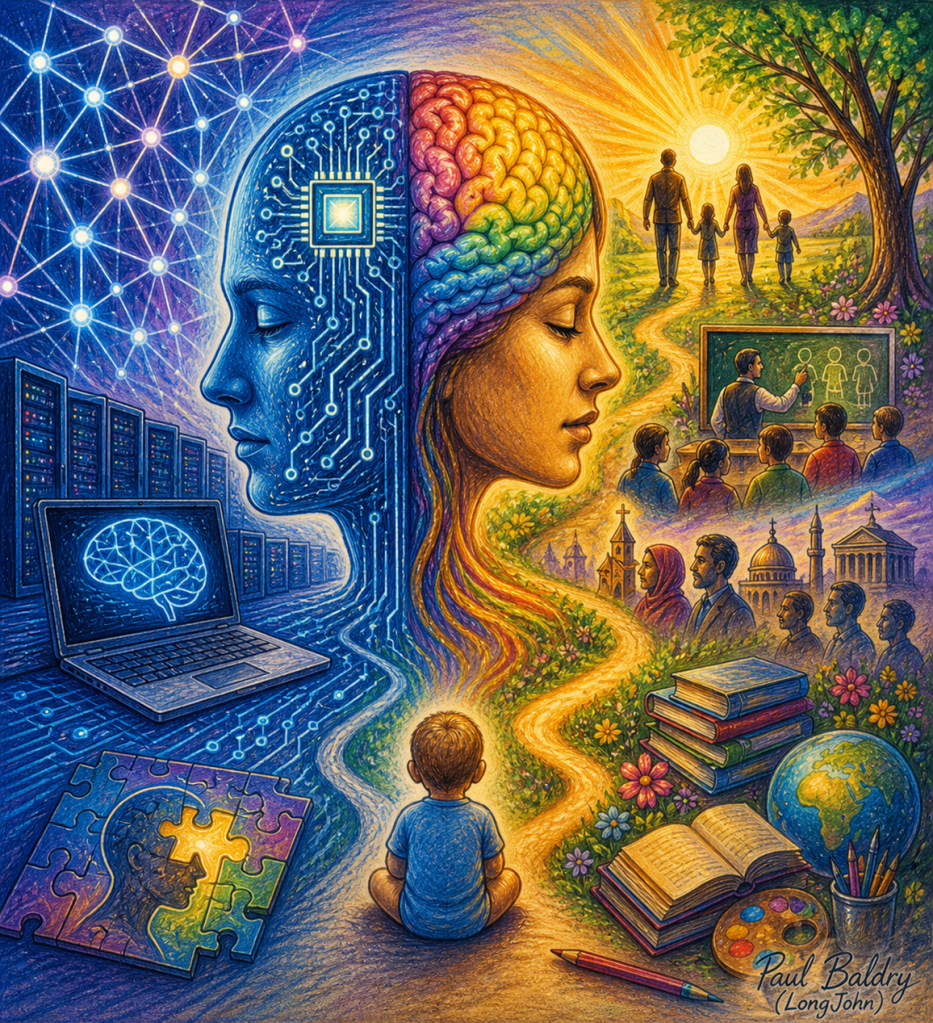
Are We Computers?
Are we computers, I ask.
Are we networked,
or individual units—
containers of information,
processing what we receive?
Able to access memory,
retrieve what was stored,
recall what we’ve lived?
Computer memory, they say, is a process:
encoded — language
stored — remembered
retrieved — thought
deleted — forgotten
The hard drive — the brain.
So, I ask again—
are we computers?
Are we individual,
or part of a network?
What is family,
if not connection?
Do we not store memories?
Do we not retrieve them?
Do we not let some fade?
Is the brain not
a living archive?
Data enters—
learned, stored, shaped.
Accessed at random—
a thought,
a response.
Are we computers, I ask.
Programming—
teaching a machine to act.
Newborn: a blank canvas.
School days: books, blackboards.
Teachers, preachers,
mothers, fathers.
Peer programming—
religion,
politics,
life.
Are we not computers?
Or is there something more?
Can you answer—
or is the question
the only freedom we have left?
What happened to free will?
Paul Baldry (LongJohn)
My reflection on what makes us human in an age shaped by code and circuitry. This poem explores the parallels between memory, learning, family, and the systems we build—asking whether we are truly individuals or part of a greater network. A plain‑spoken meditation on identity, programming, and the influences experienced that shape who we become.


Leave a Reply